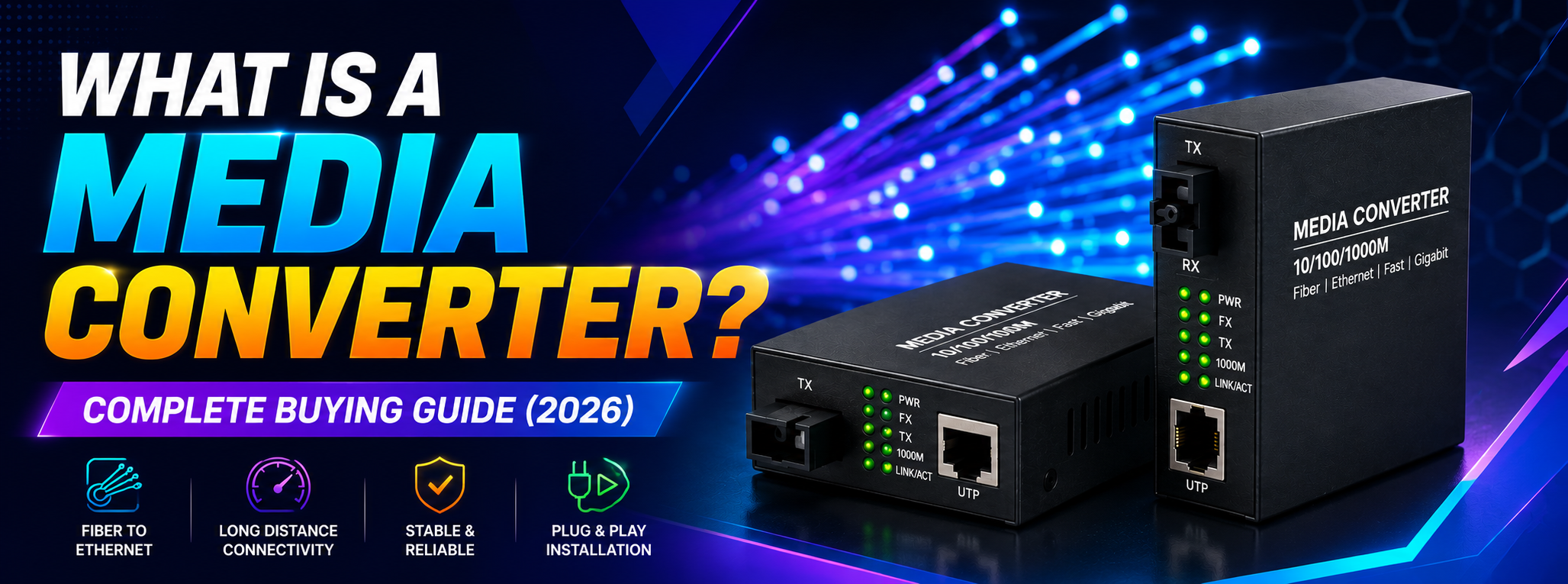
As businesses increasingly adopt fiber optic networking, the need to connect fiber cables with traditional Ethernet devices has become more important than ever. Many organizations still use copper Ethernet networks while expanding to fiber infrastructure for faster speeds and longer transmission distances. This is where a Media Converter becomes an essential networking device.
A Media Converter bridges the gap between different network media types, allowing seamless communication between fiber optic and copper Ethernet networks. Whether you're building an enterprise network, deploying CCTV systems, expanding an ISP infrastructure, or upgrading an industrial network, choosing the right media converter ensures reliable and efficient connectivity.
In this complete buying guide, you'll learn what a Media Converter is, how it works, its different types, key features, advantages, applications, and how to choose the right model for your networking project.
A Media Converter is a networking device that converts one type of network media into another. The most common application is converting electrical Ethernet signals transmitted over copper cables into optical signals transmitted over fiber optic cables, and vice versa.
Media converters make it possible to extend network distances beyond the limitations of copper Ethernet while maintaining reliable communication between different network devices.
They are widely used in offices, factories, hospitals, educational institutions, ISPs, data centers, surveillance systems, and industrial automation.
A Media Converter receives data from a copper Ethernet connection through an RJ45 port and converts the electrical signal into an optical signal. The optical signal is then transmitted over a fiber optic cable to another media converter, which converts it back into an Ethernet signal for the destination device.
This conversion enables businesses to extend their networks over much longer distances without compromising performance or reliability.
This is the most commonly used type of media converter. It converts fiber optic signals into Ethernet signals, allowing fiber networks to connect with standard Ethernet devices.
Single Mode Media Converters are designed for long-distance communication using single-mode fiber cables. They are ideal for ISPs, telecom companies, and enterprise backbone networks.
Multi Mode Media Converters are suitable for short-distance communication inside buildings, campuses, and data centers.
Gigabit Media Converters support 1000Mbps data transmission, making them ideal for modern business networks requiring high-speed connectivity.
Industrial models are designed for harsh environments such as factories, warehouses, transportation systems, and outdoor installations. They offer wider operating temperatures and enhanced durability.
Fiber optic communication allows data transmission over several kilometers without significant signal loss.
Most media converters require no software configuration. Simply connect the cables and power supply, and the device starts working immediately.
Gigabit media converters provide stable and fast communication for bandwidth-intensive applications.
Fiber optic connections are resistant to electromagnetic interference (EMI), ensuring stable network performance even in industrial environments.
Media converters allow organizations to extend their existing Ethernet infrastructure without replacing all networking equipment.
Media converters are used in various networking environments where fiber and Ethernet need to work together.
| Feature | Media Converter | Network Switch |
|---|---|---|
| Primary Function | Convert Fiber & Ethernet | Connect Multiple Devices |
| Fiber Support | Yes | Depends on Model |
| Multiple Ports | Usually No | Yes |
| Traffic Management | No | Yes (Managed Models) |
| Typical Use | Network Extension | Network Distribution |
Choose between Single Mode (SMF) and Multi Mode (MMF) depending on your transmission distance.
Choose Fast Ethernet or Gigabit Ethernet according to your network requirements.
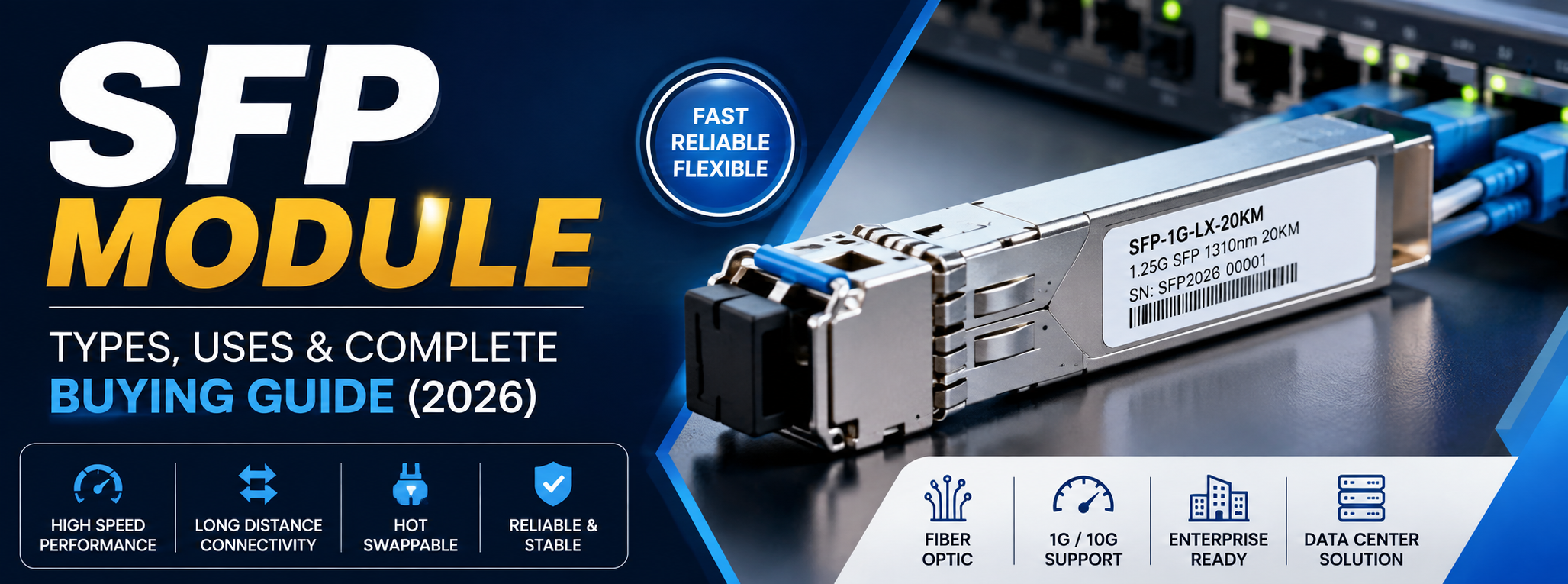
Ensure compatibility with SC, LC, or SFP fiber connectors used in your network.
Select a converter that supports the required distance, whether it's 300 meters, 10 KM, 20 KM, or longer.
For industrial environments, choose rugged industrial media converters designed to withstand extreme temperatures and harsh conditions.
South Bangla Computers is a trusted supplier of genuine networking products in Bangladesh. We provide high-quality media converters, managed switches, SFP modules, fiber optic accessories, and enterprise networking solutions from leading global brands.
Whether you're building a new fiber network or upgrading an existing infrastructure, our experienced networking specialists can help you choose the right media converter based on your project requirements and budget.
A Media Converter is used to connect copper Ethernet networks with fiber optic networks by converting electrical signals into optical signals and vice versa.
Yes. By using fiber optic cables, media converters can extend network connections from a few hundred meters to several kilometers depending on the model.
Single Mode Media Converters support long-distance communication, while Multi Mode Media Converters are designed for shorter distances within buildings and campuses.
Most standard media converters are plug-and-play devices that require no software configuration.
A Media Converter is an essential networking device that enables seamless communication between fiber optic and Ethernet networks. It offers a cost-effective solution for extending network distances, improving performance, and integrating modern fiber infrastructure with existing Ethernet equipment. Whether you're managing a business network, deploying CCTV systems, or expanding ISP services, choosing the right media converter ensures reliable, high-speed connectivity and long-term network scalability.
If you're looking for genuine Media Converters, fiber optic accessories, and enterprise networking solutions, South Bangla Computers offers trusted products, expert guidance, and reliable support to help you build a future-ready network.