As Fiber-to-the-Home (FTTH) technology becomes the standard for high-speed internet, Optical Network Units (ONUs) play a critical role in delivering reliable broadband connections to homes and businesses. Whether you're an Internet Service Provider (ISP), a business owner, or a homeowner using fiber internet, understanding how an ONU works can help you build a more efficient and future-ready network.
This guide explains what an ONU is, how it works, its features, advantages, common applications, and how to choose the right ONU for your fiber optic network.
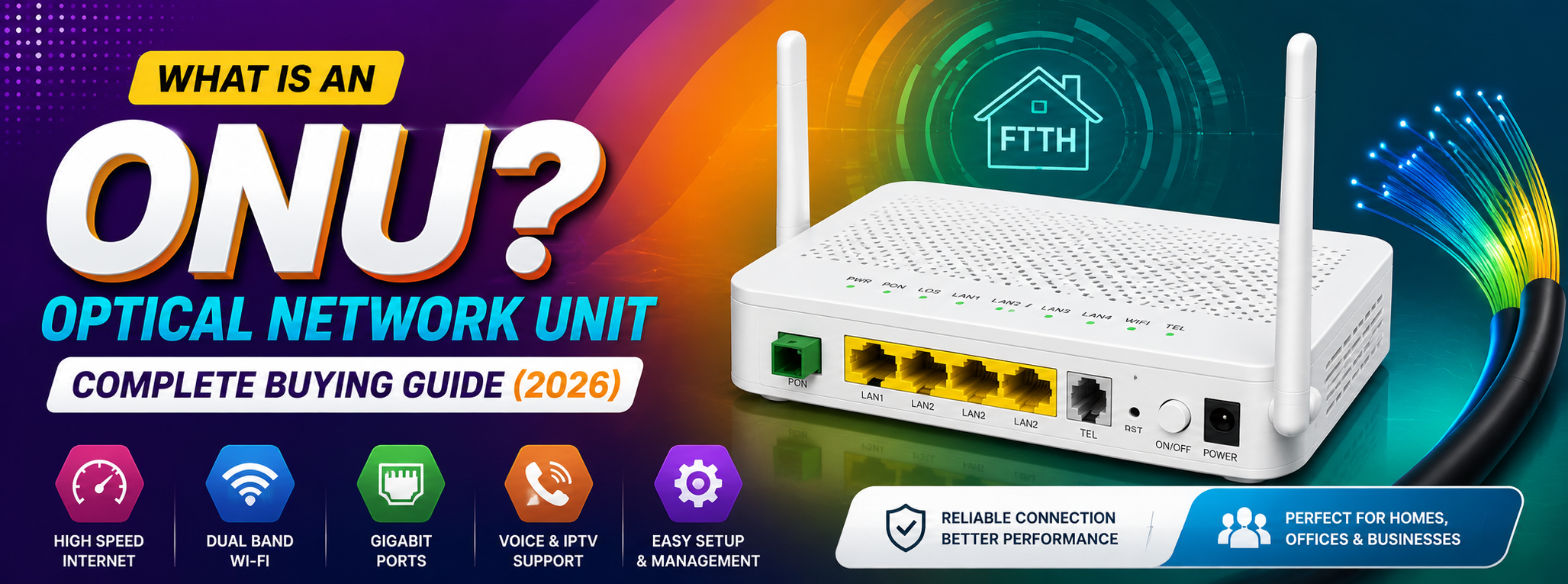
An Optical Network Unit (ONU) is a customer-side networking device used in GPON, EPON, and XPON fiber optic networks. It receives optical signals from the Optical Line Terminal (OLT) through a fiber optic cable and converts them into Ethernet signals that computers, routers, switches, IPTV devices, and VoIP phones can use.
The ONU acts as the bridge between the fiber network and the customer's local area network (LAN), providing stable, high-speed internet access.
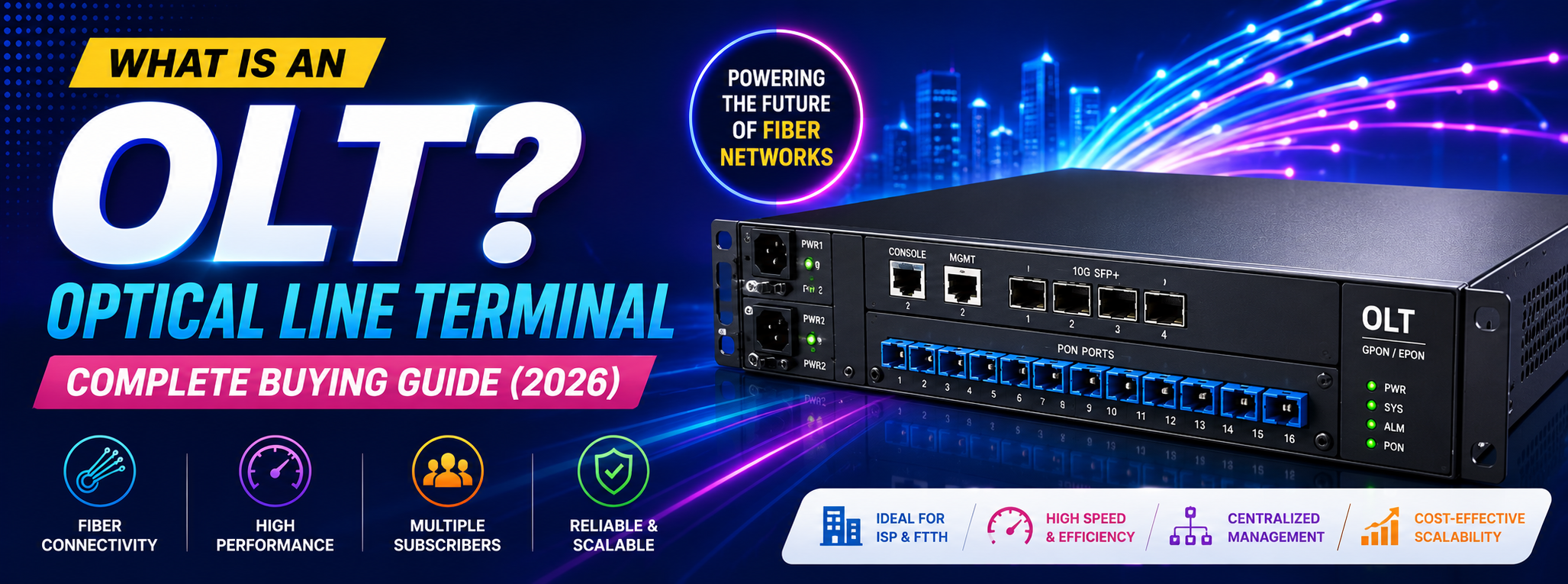
The OLT located at the ISP's central office sends optical signals through a passive optical splitter. These signals travel over fiber optic cables to the ONU installed at the customer's location.
The ONU converts the incoming optical signals into Ethernet signals for connected devices while also transmitting upstream traffic back to the OLT. This enables seamless two-way communication over a single fiber infrastructure.
Supports stable broadband connectivity for streaming, gaming, online meetings, and cloud applications.
Most modern ONUs include Gigabit LAN ports for connecting routers, PCs, switches, smart TVs, and surveillance systems.
Many XPON and GPON ONUs feature dual-band Wi-Fi, eliminating the need for a separate wireless router in smaller installations.
ISPs can remotely monitor, configure, and troubleshoot ONUs, reducing maintenance time and improving customer support.
| Feature | ONU | ONT |
|---|---|---|
| Primary Use | Business & Shared Networks | Residential Users |
| Fiber Connectivity | Yes | Yes |
| Ethernet Output | Yes | Yes |
| Wi-Fi Support | Some Models | Many Models |
| Typical Deployment | Enterprise & ISP | Home FTTH |
Ensure the ONU is compatible with your ISP's GPON, EPON, or XPON infrastructure.
Select an ONU with enough Gigabit Ethernet ports for your current and future networking needs.
If you need wireless connectivity, choose a dual-band Wi-Fi ONU for better coverage and performance.
Look for remote management capabilities if the ONU will be deployed in a business or ISP environment.
An ONU converts fiber optic signals into Ethernet signals, allowing end users to access internet, IPTV, and voice services.
No. An ONU connects the fiber network to your local network. Some models include built-in Wi-Fi routing features, while others require a separate router.
Yes. Depending on the model, an ONU can connect multiple wired and wireless devices simultaneously.
An Optical Network Unit (ONU) is a key component of any GPON, EPON, or XPON fiber network. It provides fast, stable, and reliable internet connectivity while supporting modern digital services such as IPTV, VoIP, and cloud applications. Choosing the right ONU ensures better performance, easier network management, and a future-ready broadband experience.
South Bangla Computers offers genuine ONU devices, GPON solutions, networking equipment, and expert technical support to help you build a reliable fiber optic network for homes, businesses, and ISPs.